
Introduction
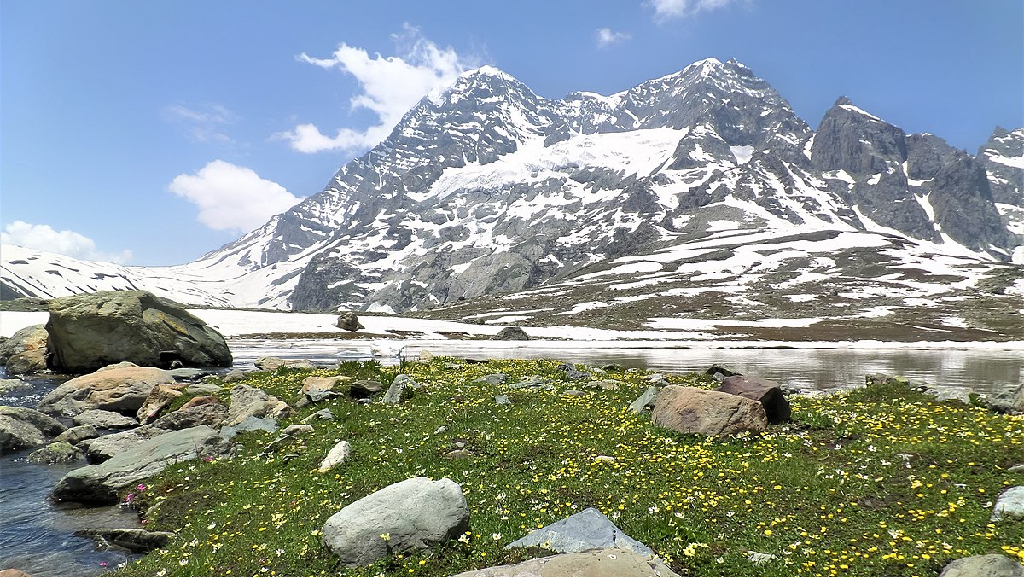
Kashmir, also called “Paradise on Earth”, is characterized as a land of high peaks, pristine lakes, and emerald pastures. Tourists often go to the famous destinations of Gulmarg and Sonmarg; hidden among the magnificence of the Himalayas is the little-known but magnificent – Harmukh Mountain.
Called the “Kashmir Kailash”, Harmukh is treasured for its religious meaning and loved and admired for the fantastic trekking routes that challenge as well as reward you. Rising at 5,142 meters (16,870 ft), Harmukh is the second tallest peak in the Kashmir Valley after Nanga Parbat and is known to be the origin of the holy Gangbal Lake.
This awe-inspiring peak has attracted pilgrims, explorers, and nature people for centuries. If you are looking for a spiritual connection, adventure trekking or exhilarating views, you won’t be disappointed with Harmukh Mountain.
Providing you with an all-in-one travel guide, Travelogear Holidays discusses Harmukh Mountain’s history, its significance, trekking routes, attractions, perfect times to visit, and lastly travel tips. You will have gained all that you need to plan your own Harmukh adventure.
History & Significance of Harmukh Mountain
Mythological Roots:
In Kasmir Hindu mythology, Harmukh has special religious importance. It is claimed to be the home of Lord Shiva, like Mount Kailash in Tibet. The local folklore claims, if someone climbs Harmukh with a pure heart as a devotee, they can catch a glimpse of Kailash Parvat.
- Gangbal Lake, at the base of Harmukh, is known as Haridwar of Kashmir, and is similar to Manasarovar Lake in Tibet. Every year, pilgrims conduct a yatra called the Gangbal Yatra, where they honor their ancestors by performing rituals and obstruction.
Exploring History:
- The first record of exploring the area was in 1856, when Thomas Montgomerie of the Great Trigonometry Survey climbed Harmukh.
- The summits of K1 and K2 (the second tallest mountain in the world), were the first time they were seen and mapped from Harmukh, making it significant in mountaineering history.
So, Harmukh is not just a religious symbol, but a site of adventure and pioneering exploration in the Himalayas.
Best Time to Visit Harmukh
Harmukh and Gangbal Lake are best visited from June through to September.
- June – July: Snow is melting, the meadows are alive with wildflowers, and the trek is open.
- August: The weather is clear and nice, offering optimal trekking conditions.
- September: The air is crisp with fewer trekkers, the stunning autumn is gorgeous, and you can enjoy it at a slower pace.
- ⚠️ Winter (October- May) is very harsh, with heavy snow conditions making the area inaccessible.
Location & How to Reach
Region: Ganderbal District, Kashmir Valley
Altitude: 5,142 meters (16,870 ft)
Base Camp Villages: Naranag or Sonmarg
Popular Trekking Routes to Harmukh
The Harmukh Region features many options for trekking, each with its own challenges and landscape characteristics.
1. Naranag to Gangbal Lake Trek (the Classic Route)
- Duration: 3-4 days
- Route Description: Naranag → Trunkhol Meadows → Augn Bal Lake → Harmukh Base
- Highlights: Ancient temples at Naranag, abundant pine trees, meadows, alpine lakes.
- Difficulty: Moderate to Challenging
This is the most common trek, and is often included as a summit attempt on Harmukh Peak.
2. Sonmarg to Gangbal Lake via Nichnai Pass
- Duration: 4–5 days
- Route: Sonmarg → Nichnai → Vishansar Lake → Krishansar Lake → Gangbal → Harmukh Base
- Highlights: This route also includes a section of the Kashmir Great Lakes Trek, and has the advantage of having several alpine lakes on the trek.
- Difficulty: Moderate
Best suited for trekkers who have a desire to bag Harmukh, and also a number of the other Kashmiri alpine lakes.
3. Arin Valley Route (Bandipora Side)
- Duration: 4–6 days
- Route: Bandipora → Arin Valley → Sat Sar Lakes → Gangbal Lake → Harmukh Base.
- Highlights: Offers the stunning views of the seven lakes (Sat Sar), remote landscapes, and solitude.
- Difficulty: Challenging, for experienced trekkers.
This is a relatively lesser travelled route which captures wild wilderness and occurs way less trekkers.
4. Summit Route from Gangbal Lake
- Duration: 2–3 days from Gangbal Base Camp
- Altitude: 5142 m (16,870 ft)
- Difficulty: Strenuous; involves technical climbing.
- Best For: Experienced moutaineers looking to ascend to Harmukh Peak itself.
Major Attractions Around Harmukh
1. Gangbal Lake
Also referred to as the “Lake of Shiva,” it is located at an elevation of 3,575 metres.
Every year, pilgrims engage in Gangbal Yatra in August or September.
2. Nundkol Lake
Located adjacent to Gangbal Lake, Nundkol Lake is a stunning area surrounded by pastures and shepherd huts.
It is an excellent location for photography and camping.
3. Trunkhol Meadows
Trunkhol Meadows are known for being covered by wildflowers, with extensive views of Harmukh Mountain.
It is a popular camping site for trekkers.
Naranag Temple Ruins
The Naranag Temple is sacred to both Hindus and Muslims.
It was built in the 8th Century by King Lalitaditya.
4. Sat Sar Lakes
The Sat Sar Lakes are a series of seven alpine lakes connected through a series of trails.
They are located a bit off the main trek coming from Bandipore.
5. Gujjar and Bakarwal -Pastoral Life
The Gujjar and Bakarwal tribes tend and graze livestock in the pasture areas.
The interaction with locals can provide insight into some of the cultural aspects of nomadic pastoralist life.
Accommodation Options
- On Trek: Only camping is offered, Travelogear Holidays will be supplying all camping equipment (including tents, sleeping mats, sleeping bags, etc.)
- At Base (Naranag/Sonmarg): Guesthouses and lodges are available.
- In Srinagar: There are many choices from luxury houseboats on Dal Lake to budget hotels.
Food & Meals
During treks, meals are freshly cooked and vegetarian, including rice, lentils, vegetables, soups, and tea. Travelogear Holidays ensures:
Hygienic food
Hot beverages
Packed lunches for trekking days
Essential Packing List
- Hiking shoes with good grip (non-slip)
- Warm clothing (layers, thermals, fleece, down jacket)
- Rain gear (poncho or rain jacket)
- Backpack (50–60L) with rain cover
- Trekking poles and gloves
- Water bottle / hydration pack
- Sunglasses, sunscreen, and lip balm
- Torch / headlamp.
- First aid kit / personal medications.
Difficulty & Safety
- Level of Difficulty: Moderate to Difficult
- Height: Above 3,500 meters – AMS precautions necessary
- Safety Measures: Travelogear Holidays employs experienced guides, oxygen cylinders, and first aid kits.
The Naranag–Gangbal route can be undertaken by beginners and those feeling adventurous can take the summit routes or the trails from Bandipora.
Cost of Harmukh Trek
Standard Trek Package: ₹14,000 – ₹18,000 per person (4–5 days)
Includes: Transport, camping, meals, trekking permits, guides, equipment.
Excludes: Flights, personal expenses, tips.
Travelogear Holidays guarantees transparent pricing with no hidden costs
Why Choose Travelogear Holidays?
🚐 Private Transfers: Relax in comfort between Srinagar and the base camp for your trek.
🏕️ Premium Camping: Top-notch tents and sleeping arrangements provided.
🥾 Expert Guidance: Locals with years of trekking experience.
🛡️ Safety is Key: Medical personnel and rescue-ready support.
📅 Custom Itineraries: Short treks, long treks, and spiritual pilgrimages for your experience.
We take care of transforming your Harmukh experience into a safe, smooth, and incredible journey.
Travel Tips
1. Acclimatize in Srinagar or Sonmarg before departing.
2. Even in summer carry adequate warm clothing.
3. Take buffer days in case of delays due to weather.
4. Travel in groups – safety in numbers.
5. Be respectful of local customs and fragile ecosystems.
Conclusion
Harmukh Mountain is more than a trek; it is a heartfelt experience to the core of Kashmir. With sacred lakes, mythological stories, tough pathways, and mesmerizing views, it embodies everything that makes the Himalayas a legend.
Whether you are a pilgrim in search of divine blessings, a trekker looking for high-altitude adventure, or a traveler in search of raw beauty, Harmukh welcomes you with a warm embrace.
With Travelogear Holidays, you are not simply trekking; you are enjoying Kashmir in its stripped-down form, with knowledgeable guidance, a cultural experience, and lasting memories.
❓ Top 10 FAQs about Harmukh Mountain Trek
1. Where is Harmukh Mountain located?
It lies in Ganderbal district, Kashmir Valley, near Gangbal Lake.
2. What is the altitude of Harmukh?
5,142 meters (16,870 ft).
3. Why is Harmukh called the “Kashmir Kailash”?
Because it is believed to be the abode of Lord Shiva, similar to Mount Kailash in Tibet.
4. What is the best time to trek Harmukh?
June to September, when trails are snow-free and weather is stable.
5. Which is the easiest route to Harmukh?
The Naranag → Gangbal Lake route.
6. Can beginners do the Harmukh trek?
Yes, with proper fitness and guidance from Travelogear Holidays.
7. Is camping allowed at Gangbal Lake?
Yes, and it is one of the most popular spots for trekkers.
8. Do I need special permits for the trek?
Yes, permits are required and arranged by Travelogear Holidays.
9. How difficult is the summit climb?
The summit requires technical climbing skills, suitable only for experienced mountaineers.
10. Why book with Travelogear Holidays?
For expert guides, premium camping, safe arrangements, and customized trekking itineraries.
How to book Harmukh Mountain Trek Packages With Travelogear Holidays?
For a seamless and exceptional booking experience,
Contact Travelogear Holidays at: reservationtravelogearholidays@gmail.com or call us at : 9906903196